// cs student · ai security · cloud · karachi, pk

Muhammad Bilal
Zeeshan

I break AI systems to learn how to secure them — then I teach what I find.

A-levels student working across AI security research, SOC operations, and cloud computing — through internships, home-lab experiments, and teaching Python and cybersecurity to 50+ students.

  • open to internships
  • karachi, pakistan
  • a-levels ’27

live excerpt — prompt-injection testbed, jul 2026

01// about

Learning by building,
breaking, and teaching.

I’m a Cambridge International A-levels student in Karachi who got into computers the hands-on way: setting up a home SOC lab with Wazuh and pfSense, deploying serverless APIs on Azure, and stress-testing chatbots to see exactly where their guardrails fail.

My internships so far span three sides of the same curiosity — offense-minded AI security research at ZeroDay Reapers, defensive SOC operations at ITSimplera, and cloud engineering at Decode Labs. In between, I teach: Python and cybersecurity to students at UTech Digital Education, and Python to my peers as general manager of my school’s coding club (2025–26 session).

I’m currently building GenCode Learning, an education platform (in early development), and preparing for university applications in computer science.

focus
ai security · soc ops · cloud
currently
ai security intern @ zeroday reapers
teaching
50+ students taught (python + cybersecurity)
stack
python · next.js · azure · wazuh
elsewhere
github · linkedin

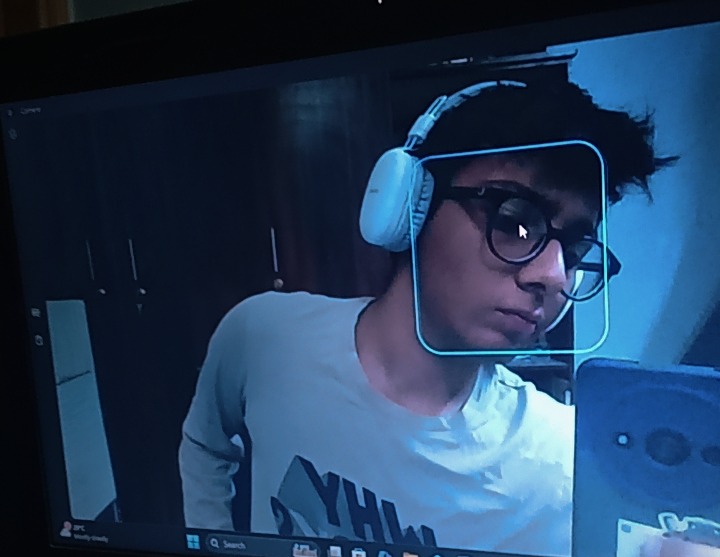
subject_01 // karachi, pk

Muhammad Bilal Zeeshan on a late-night build session

02// field log — experience

Where I’ve worked.

log-01 · current

AI Security Intern

ZeroDay Reapers — remote

jul 2026 – present

  • “Break the Bot”: tested 9 prompt-injection techniques against llama-3.3-70b-versatile (Python + Groq API), plus hidden-instruction smuggling via local Ollama.
  • Ran a data-poisoning experiment: 1% poisoned data → 90%+ targeted attack success (accuracy 97.22% → 96.94%).
  • Demonstrated RCE via unsafe pickle deserialization (picklescan / Fickling, SafeTensors) and wrote a 29-page end-to-end chatbot attack report.
  • Python
  • Groq API
  • Ollama
  • Prompt injection
  • Model security

log-02

SOC Analyst Intern

ITSimplera Institute — karachi

jun 2026 – aug 2026

  • Built a home SOC lab: Wazuh (dashboard, indexer, Filebeat), pfSense, Squid, ClamAV, Syslog-NG; validated detections with EICAR tests.
  • Built a Wazuh → n8n → Gemini pipeline that enriches alerts into assessed threat intel.
  • Wrote custom detection rules and playbooks, mapped findings to MITRE ATT&CK, and investigated incidents end to end.
  • Wazuh
  • pfSense
  • n8n
  • Gemini API
  • Linux

log-03

Cloud Computing Intern

Decode Labs — remote

jul 2026 – aug 2026

  • Built and deployed a serverless cost-calculator API on Azure Functions (Python 3.13, Core Tools).
  • Hosted static sites on Azure Blob Storage; worked with S3, cloud networking, and identity concepts.
  • Shipped the project open-source with docs and a live endpoint.
  • Azure Functions
  • Python
  • Blob Storage
  • AWS
  • REST APIs

log-04 · current

Full Stack Development Intern

Auspify Technologies — remote

sep 2026 – present

  • Recently selected; work beginning — updating this log as it happens.
  • Full-stack web

03// lab notebook — projects

Experiments, not demos.

A curated set. Each one started with a question, ended with a measured answer, and lives in a repo with notes.

exp-01adversarial ml

Break the Bot

Q: how easily can a chatbot’s instructions be hijacked?

Method: 9 prompt-injection techniques against llama-3.3-70b-versatile via the Groq API, plus hidden-instruction smuggling through local Ollama models.

Result: multiple working bypasses, documented with a 29-page end-to-end attack report.

  • Python
  • Groq API
  • Ollama
exp-02adversarial ml

Data Poisoning, Measured

Q: how little poisoned data does it take to own a classifier?

Method: injected a 1% poisoned subset into training data and measured targeted attack success against a held-out test set.

Result: 1% poison → 90%+ attack success, with accuracy slipping only 97.22% → 96.94% — the scary kind of stealthy.

  • Python
  • scikit-learn
exp-03defense

SOC Monitoring Lab

Q: can I run enterprise-grade detection from my bedroom?

Method: home lab with Wazuh (dashboard, indexer, Filebeat), pfSense firewall, Squid proxy, ClamAV, and Syslog-NG; EICAR-based detection validation.

Result: working SIEM with custom rules, MITRE ATT&CK-mapped playbooks, and an AI alert-enrichment pipeline.

  • Wazuh
  • pfSense
  • Linux
View repository
exp-04model security

The Backdoored Model

Q: what happens when you pickle.load() a stranger’s model?

Method: crafted malicious pickle payloads, scanned them with picklescan and Fickling, and compared against SafeTensors as the safe path.

Result: reliable RCE on load — and a clear, repeatable case for never trusting serialized models.

  • Python
  • picklescan
  • Fickling
View repository
exp-05cloud

Serverless Cost Calculator

Q: can serverless be this simple?

Method: Azure Functions API (Python 3.13, Functions Core Tools) with a clean REST endpoint, deployed from the Decode Labs cloud internship.

Result: live API + static frontend, open-sourced with docs.

  • Azure Functions
  • Python
  • REST
View repository
exp-06in development

GenCode Learning

Q: what would learning to code look like if it were built for students like me?

Method: early-stage education platform — Next.js + TypeScript + Tailwind frontend, Supabase backend. Co-founded with a partner; currently in active development.

Status: building in the open. No launch claims until there’s something to show.

  • Next.js
  • TypeScript
  • Supabase

more on github.com/mbilalzeeshan →

04// knowledge transfer

I teach what I learn.

Explaining something forces you to actually understand it. Teaching is half of how I learn.

utech digital education · dec 2024 – present

Junior Instructor

30+python students
~20cybersecurity students

Project-based Python courses and cybersecurity fundamentals: OSINT, Google dorking, image search, bug-bounty concepts, social engineering, and the CIA triad — taught through hands-on labs, not slides.

homebridge data ninjas · 2025 – 26

General Manager

weeklyhands-on python classes

I ran my school’s coding club for the 2025–26 session — coordinating activities, liaising with school management, and teaching Python to peers in weekly sessions.

subject_02 // candid

Muhammad Bilal Zeeshan in a blue shirt

05// toolkit

What I reach for.

No proficiency bars, no padding — just the tools I’ve actually shipped or defended with.

languages

  • Python
  • JavaScript / TypeScript
  • HTML / CSS

web & cloud

  • Next.js
  • Tailwind CSS
  • Supabase
  • REST APIs
  • Azure Functions
  • AWS

security

  • Wazuh
  • pfSense
  • Linux (Kali / Ubuntu)
  • MITRE ATT&CK
  • OSINT

ai

  • Groq API
  • Gemini API
  • Ollama (local LLMs)

tooling

  • Git / GitHub
  • VirtualBox
  • n8n

06// education

In school, on purpose.

Cambridge International A Levels

Homebridge by Beaconhouse — Karachi

Computer Science · Pure Mathematics · Business Studies · Physics

2025 – 2027 (expected)

predicted A A* A A

Cambridge O Levels

The Froebel’s School — Karachi

2023 – 2025

next: bsc computer science, fall 2027 — applications in progress

07// contact

Let’s talk.

Internships, research chats, teaching collabs, or just arguing about whether prompt injection counts as hacking — my inbox is open.